Review of Qur’anic Research, Vol. 8 no. 3 (2022)
In the latest installment of the Review of Qur’anic Research (Vol. 8, no.3), Devin J. Stewart (Emory University) reviews George Archer, A Place Between Two Places: The Qurʾānic Barzakh (Piscataway, NJ: Gorgias, 2017).
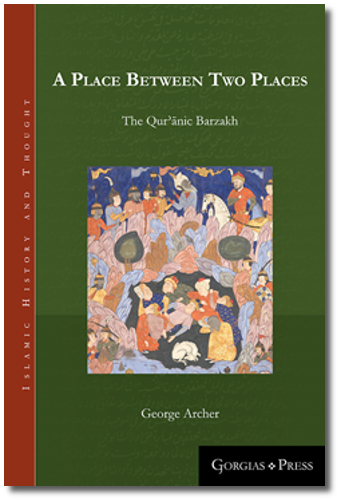 In the review, Stewart writes “In A Place between Two Places: The Qurʾānic Barzakh, George Archer addresses the term barzakh and the associated conception of an intermediate state between life and death, or life and the afterlife, in Late Antiquity, the Qurʾān, and early Islamic literature. One way to look at this work is as a response to an interpretive problem presented by the term, which occurs in three qurʾānic passages. In the first two passages, Q al-Nūr 25:53 and al-Raḥmān 55:19–20, barzakh designates a barrier—somewhat mystifying to human observers—between fresh and salt water. That the term indicates a barrier is clear from the fact that the two bodies of water are said to meet but remain separate, constituting one of the many signs of God manifested in the wondrous features of the natural world. The setting in the third passage, Q al-Muʾminūn 23:99–100, is entirely different. Here, barzakh also denotes a barrier; a dead man’s request to be returned to the world to rectify his former deeds is categorically denied, and this is declared impossible on account of the barzakh: “A barzakh stands behind such people until the day when they are resurrected.” The barrier in this case separates the realm of the dead from the realm of the living…”
Want to read more? For full access to the Review of Qur’anic Research (RQR), members can log in HERE. Not an IQSA member? Join today to enjoy RQR and additional member benefits!
© International Qur’anic Studies Association, 2022. All rights reserved.
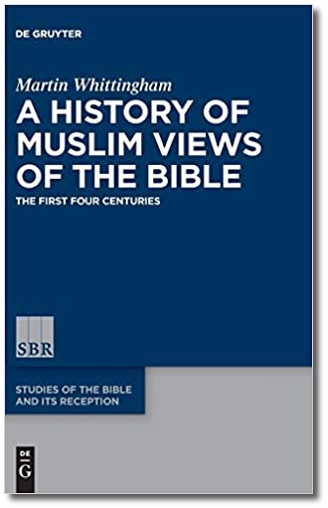 In the review, Hussain writes “
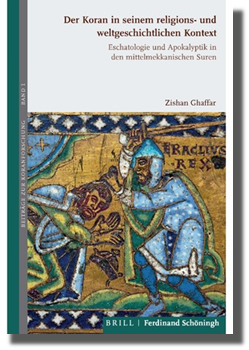 In the review, Zellentin writes “In Ghaffar’s view, the Qurʾān retells and transforms many of the historical and eschatological narratives circulating at its time, and especially those suggesting or even explicating the messianic role of Byzantine Emperor Heraclius, who ruled 610–641 CE. Instead of prevalent messianic and apocalyptic imperial ideologies, according to Ghaffar, the middle Meccan sūrahs – in arguable contrast to the later Medinan ones – offer a theology of individual piety and divine mercy that portrays the only relevant eschatological battle between good and evil as occurring within each individual, rather than on the world stage…”
 In the review, Siddiqui writes “Using a style and lens similar to “The Quranic Noah” (2015), this book is Carlos A. Segovia’s most recent contribution to the literature on the Qurʾān and its relationship to late antique Judaism and Christianity. The book also belongs to the same series, which aims to bring Judaism, Christianity, and Islam into interdisciplinary conversations about the reception and mediation of ideas within these religions. Segovia’s main purpose in this book is to “reread the Jesus passages in light of the Christological developments contemporary with the composition of the quranic corpus” (23). The author’s main concern is that in the modern study of the qurʾānic Jesus, scholars have basically moved in a single direction which is thematic and descriptive and focuses primarily on biographical episodes of Jesus and select verses which create a qurʾānic counter-Christology. This approach overlooks the multi-layered, polyvalent, and “highly complex Christology” (1) contained in the Qurʾān…”
 In his review, Ilkka writes “Nicolai Sinai’s small book, or essay, is a very welcome contribution to the study of the deity Allāh and the religious map of Arabia on the eve of Islam based on the jāhiliyyah (pre-Islamic) poetry. The work is available as an open-access e-book. Sinai’s study is rich in methodological considerations and lucid in style. The argumentation is easy to follow. In short, the essay is a joy to read. What I find especially significant is his integrated use of different source sets: in addition to Arabic poetry, he employs the Qurʾān and ancient Arabian epigraphic evidence as comparative materials (while eschewing Arabic prose literature). The picture that he puts forward is credible and well documented…”