New Publication: Female Divinity in the Qur’an by Emran El-Badawi
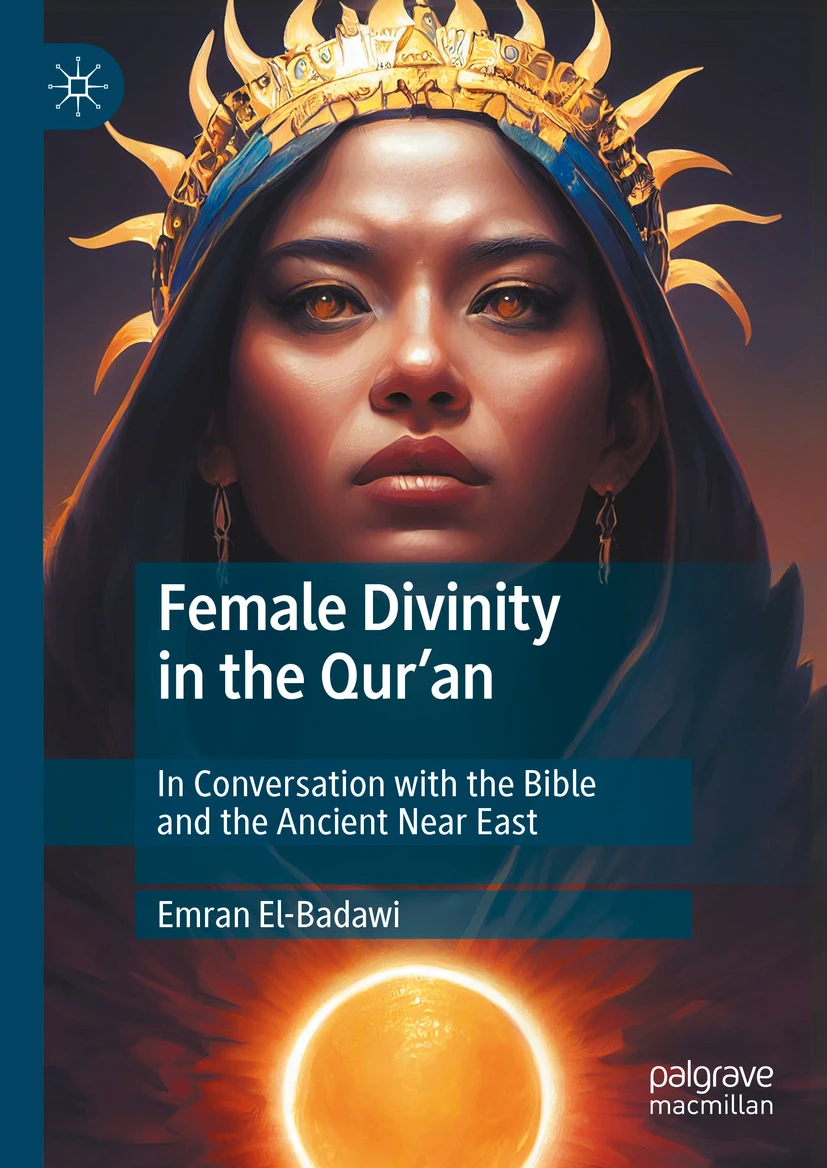
Female Divinity in the Qur’an: In Conversation with the Bible and the Ancient Near East
About this book
This is the first book to examine how pre-Islamic/Late Antique goddesses shaped the Qur’an, including its basic theology and cosmology. Exploring the traces found in the text of cultic veneration to goddesses of Arabia and the Ancient Near East, this book analyses what these traces tell us about female power in late antique Arabia, and how this power changed on the advent of Islam. While recent studies on the Qur’anic God have typically considered the question of divinity separately from gender, this book bridges the gap between these two questions, and is therefore an essential constructive mission. This mission adduces literary and documentary evidence—including recent scholarly revolutions in Syriac literature and Arabian epigraphy—and builds upon the critical insights of preceding studies in conversation with post-biblical and Near Eastern traditions.
Get access to this exciting new publication at this link.
About the author
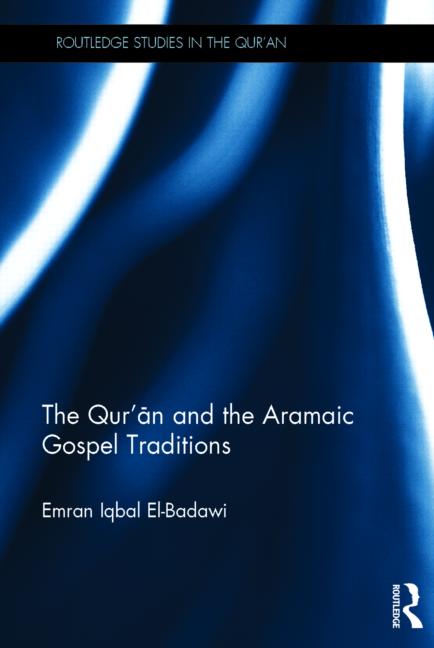
Emran El-Badawi is Dean of the College of Liberal and Fine Arts at Tarleton State University, where he is also Full Professor of History, Geography and GIS. He was formerly Chair of the Department of Modern and Classical Languages at the University of Houston, where he also served as Associate Professor and Program Director of Middle Eastern Studies. He was the first Executive Director of the International Qur’anic Studies Association (2012-2021). He is author of Queens and Prophets (2022); The Qur’an and the Aramaic Gospel Traditions (2013), and co-editor of Communities of the Qur’an (2019). His current research projects include a book on female power in late antique Arabia, and another on hate speech as a global crisis. He has contributed to Forbes, The Houston Chronicle, and The Christian Science Monitor.
Content courtesy of Springer Nature.
 Hythem combines expertise in the sciences with a specialization in Qurʾānic manuscripts and reading traditions. He holds an M.S. in applied mathematics and Ph.D. in biomolecular engineering from the University of Notre Dame. Hythem’s dual background allows him to bring together traditional philology and mathematical analysis to study the dynamics and evolution of the Qurʾān in early Islam. He has worked on the stemmatics of Qurʾānic manuscripts, reconstruction of regional oral traditions, and continues to investigate applications of stylometry to the Qurʾān.

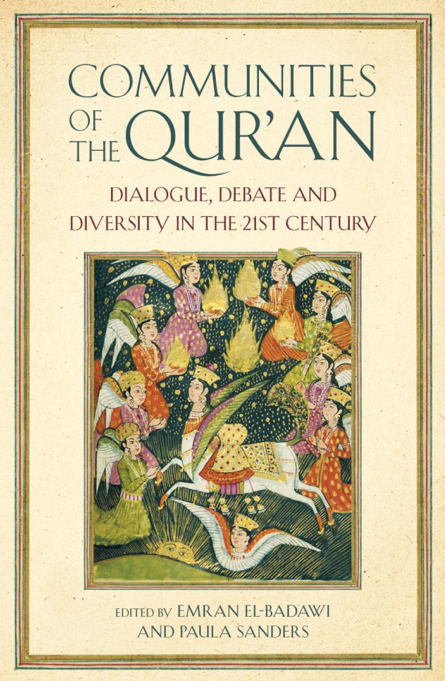
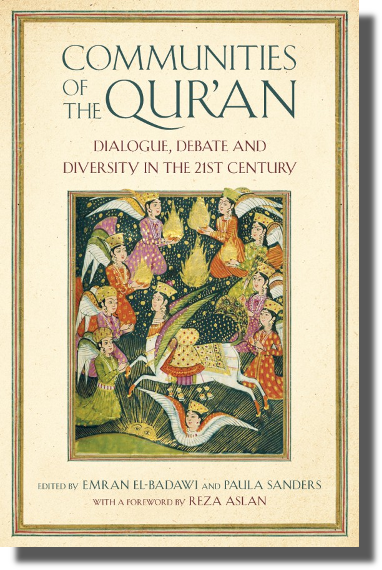 In her review, Hammer writes “When I first saw the title of the book under review here, ‘Communities of the Qur’an,’ I was excited. In the field of qurʾānic studies, there has been a decades-long (if not longer) focus on the qurʾānic text itself, on its origins and history, its linguistic and literary qualities, but rather much silence about the people who engage with it. This volume, edited by Emran El-Badawi and Paula Sanders, aims to change that by bringing together scholars who, in complex ways, write about and often also represent communities of the Qurʾān that the editors selected based on a thoughtful process. The result is a collection of essays, ten plus the introduction by the editors, rounded out with a foreword by Reza Aslan, and an afterword by Reuven Firestone…”