The International Qurʾanic Studies Association is delighted to announce that the tenth annual Andrew Rippin Best Paper Prize (open to papers delivered by early career scholars at the 2026 Annual Meeting) has been awarded to Mohammed A. Atbuosh for the paper “Notes on the Sacred Marriage in Ancient South Arabia and the Islamic Mutʿa-Marriage.”
The winner of the Andrew Rippin Best Paper Prize receives a cash award. In addition, an expanded and edited version of the winning paper will appear in the Journal of the International Qur’anic Studies Association.

This award is given in honor of Professor Andrew Rippin (1950–2016), a leading scholar of the Qurʾān and inaugural president of the International Qur’anic Studies Association (2014). Prof. Rippin is remembered as “an esteemed colleague, revered mentor, and scholarly inspiration to many members of the IQSA community.”
An abstract of the award-winning paper follows:
This paper proposes an alternative interpretation for the Sabaic Hapax term tfṯ based on a lexical and historical comparations. The Islamic traditions about the pre-Islamic Mecca provide a context that might better clarify the meaning of both terms, tfṯ and its Qurʾānic equivalent tafaṯ, as a sexual act, or a state of sexual impurity. The fertility qualities of the pre-Islamic pilgrimage align with understanding of tafaṯ meaning as such, a meaning that can be extended to Sabaic, by a comparison with a prophetic tradition which semantically parallels the Sabaic expression. This study seeks to develop a complementary understanding between the Ancient South Arabian texts and the Qurʾān, using an interdisciplinary approach, involving pre-Islamic reports, biblical parallels, and Islamic traditions.
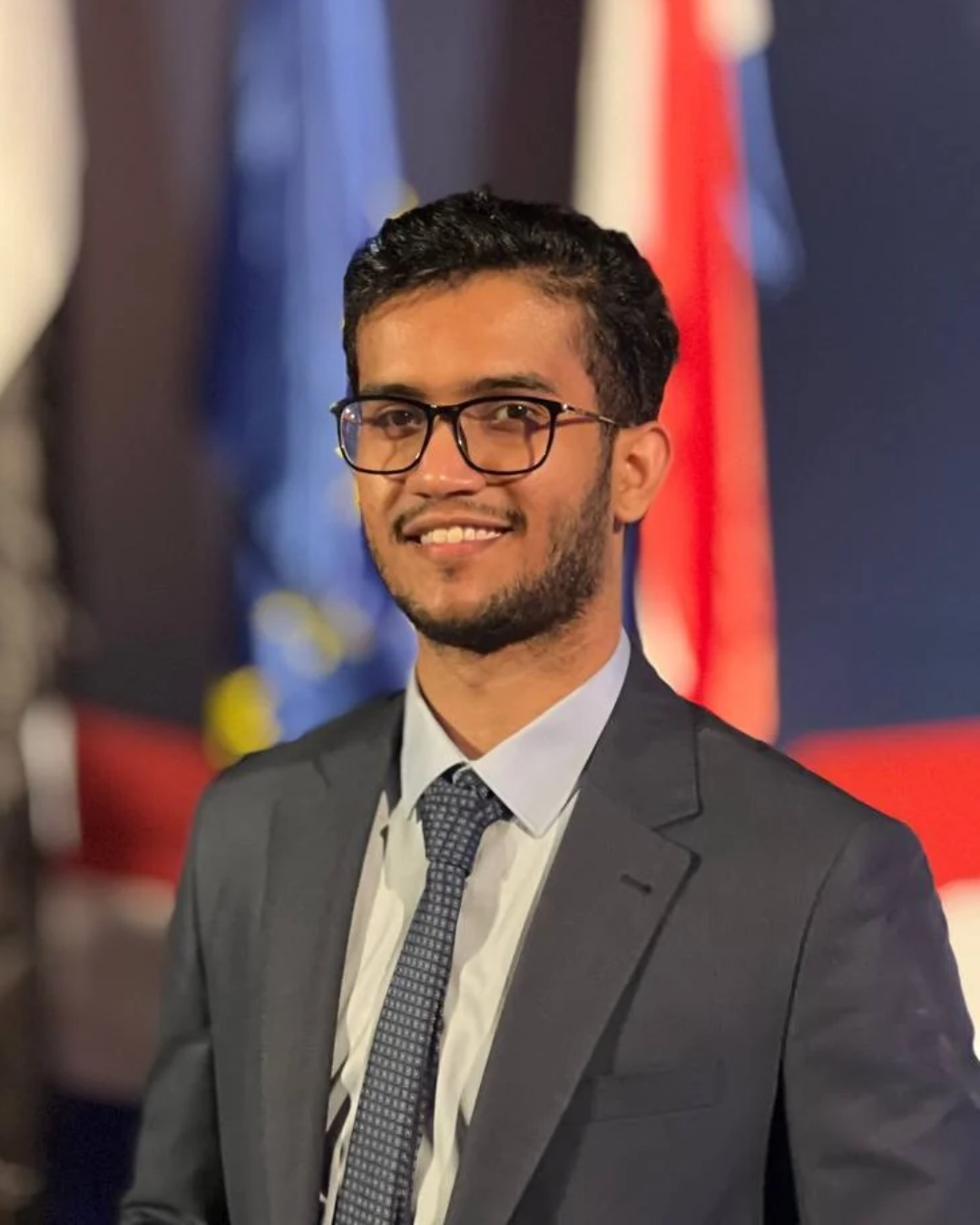
Mohammed Atbuosh is an independent researcher working on Ancient South Arabian studies and Yemeni folklore, with contributions that include anthropological investigations, lexicographical surveys, and publishing newly discovered inscriptions. Atbuosh is a visiting researcher at Jena University, Germany (April–May 2025) and editor in the Digital Archive for the Study of Pre-Islamic Arabian Inscriptions.